
Batteries of the future: beyond lithium
In the vast universe of energy technology, lithium-ion batteries have reignes supreme for decades. From our mobile phones to electric vehicles, these batteries have been the silent engine that drives our daily lives. But, like any technology, lithium also has its limitations and challenges. What comes next? Join us as we explore the batteries of the future and the alternatives to lithium that could transform the world.
Why look for alternatives to lithium?
Lithium has numerous advantages, but it also presents significant challenges. Lithium can be environmentally costly to extract, and growing demand is putting pressure on global supplies. In addition, lithium batteries, while efficient, have limitations in terms of storage capacity and safety. So what options do we have?
Battery breakthroughs: overcoming challenges for a sustainable energy future
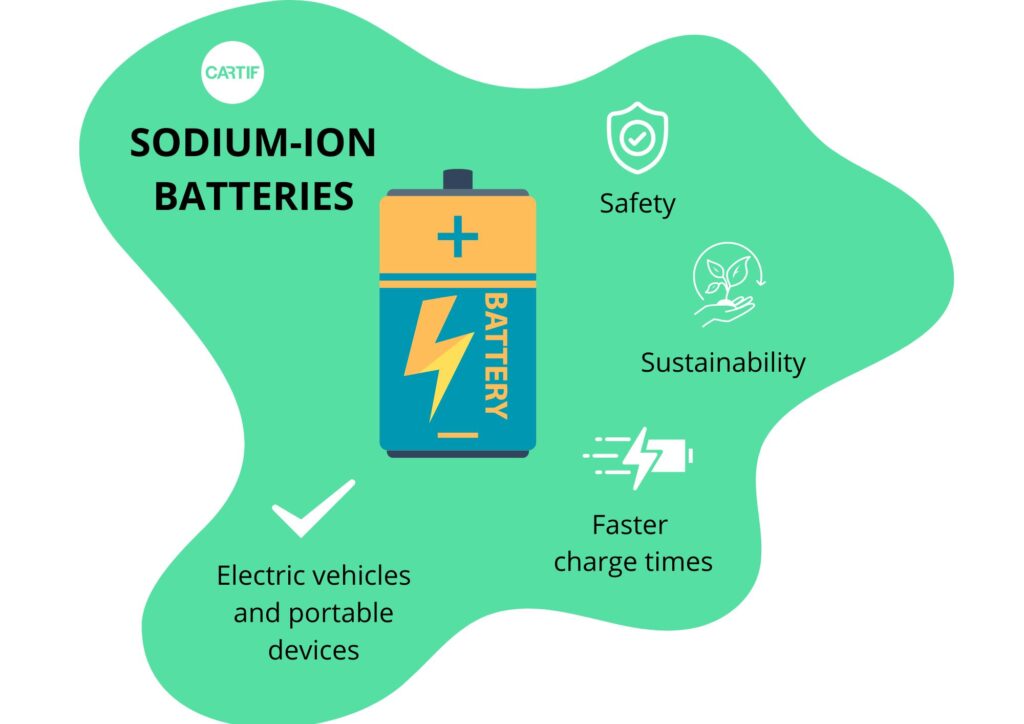
In the search for more affordable and abundant alternatives to lithium-ion batteries, sodium-ion batteries are emerging as a promising option by using sodium instead of lithium as the active ion. Although they do not currently achieve the same energy density as lithium batteries, sodium-ion batteries offer significant advantages in safety and sustainability by using more abundant and less expensive materials. In addition, solid-state batteries represent another innovation by replacing liquid electrolyte with solid electrolyte, improving safety and potentially energy efficiency with higher energy densities and faster charge times, making them ideal for applications in electric vehicles and portable devices. Finally, graphene, known for its ultra-thin and tough structure, is revolutionising energy storage with promises of ultra-fast charge times and long lifetimes, promoting significant advances in consumer electronics and industries, and paving the way for a new generation of more efficient and durable devices.
Beyond batteries: exploring new frontiers in energy storage
While electric batteries have been the mainstay of modern energy storage, relying only on one technology isn´t enough to meet the energy challenges of the future. Diversification of storage sources is essential to create a robust and resilient energy system. In addition to electric batteries, exploring options such as thermal storage and other innovative methods will allow us to make better use of renewable energy, optimise energy efficiency and ensure a constant and reliable supply.
Let´s discover some of these fascinanting alternatives!
Can abundant natural resources be harnessed for energy storage? Air and water prove it!
Compressed air storage (CAES) uses underground caverns or tanks to compress air at high pressure during periods of low electric demand. When electricity is required, the compressed air is expanded to generate power efficiently through turbines, which is crucial for stabilising power grids in areas where topography doesn´t allow for reservoirs. Hidraulic storage, on the other hand, harnesses reservoirs and dams to store and release water on demand, providing stability to the electricity system and facilitating the integration of intermitent renewable enrgies towards a more sustainable and stable future.
Energy revolution: how we cover the peaks of demand with advance technology
In the vibrant world of energy, one of the biggest challenges is managing those times when energy consumption spikes unexpectedly. How do we ensure that our power grid holds up without blackouts?

An alternative can be flywheels, which are notable for their ability to store kinetic energy in a rotating disc and release it almost instantly. But they aren´t the only heroes in this scneario. Supercapacitors, with their ability to charge and discharge energy at breakneck speeds, also play a crucial role in providing a boost of energy when it is needed most.
By integrating these technologies, which are capable of providing large power peaks in short periods of time, with other storage or generation systems, remarkable stability is achieved in electricity grids. This is especially beneficial for small or medium-sized grids that intend to operate in isolation, ensuring a reliable and constant power supply.
Phase change materials (PCM): heat under control and thermal change materials (TCM): efficient storage
Phase change materials (PCM) are substances that store and release large amounts of thermal energy during their melting and solidification process. These materials can be used for applications such as building air conditioning, improving energy efficiency and reducing the need for heating and cooling systems.
Similar to PCM, thermal change material (TCM) store thermal energy, but with different mechanisms, such as absorbing and realeasing heat through chemical reactions. The TCM can be used in thermal energy storage systems for solar power plants, increasing efficiency and storage capacity.
Storage and transport: ammonia and hydrogen. Integrated solutions
Ammonia is emerging as a promising energy carrier. It can be used as fuel directly or as a storage medium for hydrogen. As a liquid at moderate temperature and pressure, it is easier to store and transport than pure hydrogen. Moreover, it can be produced sustainably using renewable energies.
Hydrogen is considered by many to be the fuel of the future. It can be produced from water using renewable energy, stored and then converted back into electricity using fuel cells. In addition, it has thermal and mobility apllications. However, the challenge remains the infrastructure for its efficient and safe production, storage and distribution.
The future of batteries and energy storage is brilliant
The race for the next generation of energy storage technologies is in full swing. With so many promising options on the horizon, the future of portable energy and storage looks brighter than ever. From sodium and graphene to innovative phase-change materials and hydrogen, we are on the verge of an energy revolution.
At CARTIF, we excel with innovative projects that explore advanced solutions for energy storage, such as THUMBS UP and SINNOGENES, among others. These projects reflect our strong commitment to research and development of sustainable technologies that are set to transform the global energy landscape. Keep up to date with the latest news by visiting our blog and website to follow these exciting developments.